






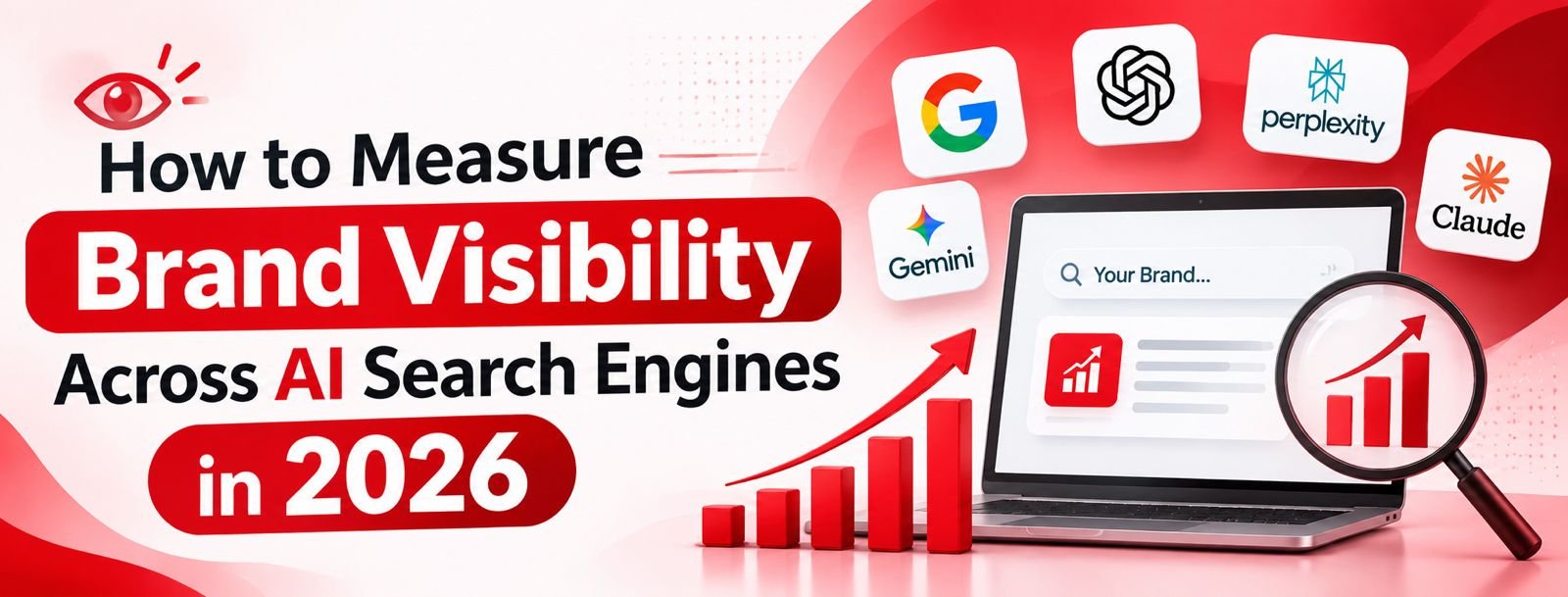
People often use tools like ChatGPT, Gemini, and Perplexity to research products, compare services, and find businesses. Than scrolling through many search results pages they can get a direct answer that names a few brands and links to selected sources.
This change means businesses must rethink visibility. A strong Google ranking still matters. It does not guarantee that a brand will appear in an AI-generated recommendation. Brand Visibility in AI Search is about whether these platforms recognise a business, mention it in answers, and use its content as a source.
Why Google Rankings Are Only Part of the Picture
Traditional SEO reporting focuses on keyword positions, traffic, backlinks, and website performance. These measures are still useful. They cannot show how often a business appears in AI-generated responses.
For example, someone might ask an AI platform to recommend an SEO company in Coimbatore. The response could name providers without the user having to visit a traditional search results page. If your business is missing from that answer, you may be overlooked during the research stage.
Thus, businesses must monitor visibility across both search results and AI-powered discovery platforms.
Metrics That Help Measure Brand Visibility in AI Search
1. Brand Mentions
Check how often AI platforms name your business in response to customer questions. Try prompts such as "Which agencies provide SEO services in Coimbatore? " or "What should I look for when choosing an SEO partner?”
Record whether your brand appears, the context in which it is mentioned, and which competitors appear alongside it. Use a set of prompts so that results can be compared over time.
2. Website Citations
A brand reference simply identifies your business, whereas a citation directs readers to a website or source that verifies the information.
Track whether AI responses link to your website and which pages are referenced. This can help identify the content that is being surfaced and where useful information may be missing.
3. AI Share of Voice
Share of voice shows how often your brand appears compared with competitors across a defined set of prompts. For example, if your brand accounts for 20 of 100 brand mentions in the responses you reviewed, its share of voice is 20%.
Treat the data as a comparison within your chosen prompt set, not as a measure of every AI search interaction. A consistent method makes changes easier to interpret.
4. Brand Accuracy and Sentiment
Are your services and location correct? Does the response reflect your expertise? Is the tone positive, neutral, or negative?
Note details as well as the overall sentiment. You can then review your website and other trusted business profiles to make sure the information about your brand is clear and consistent.
5. Referral Traffic and Conversions
Where analytics tools identify visits from AI platforms, monitor that traffic alongside engagement, enquiries, and conversions. Referral data may not capture every interaction, so it should be treated as one indicator rather than a complete record of AI-driven discovery.
The aim is to understand whether visibility is bringing visitors and contributing to business goals.
6. Competitor Presence
Run the prompts for your business and its competitors. Compare brand mentions, associated services, and answer sources.
This analysis can reveal topics your content does not cover and questions where competitors are more visible.
How to Build a Practical AI Visibility Tracking Process
Keep Your Prompts Consistent
Create a list of questions that reflect how potential customers search: questions, service comparisons, and recommendations. Test the prompts across relevant AI search engines, such as ChatGPT, Gemini, Perplexity, and Claude.
AI responses can vary by platform, prompt, and time, so record the date, platform, and exact wording used. Review the results regularly rather than concluding a single check.
Choose Tools That Match Your Needs
AI Visibility Tracking tools can help organise brand mentions, citations and competitor comparisons. Platforms such as Semrush AI Visibility Toolkit and Ahrefs Brand Radar offer features for monitoring brand presence in AI search.
Check what each tool measures before comparing reports. Their data sources and methods may differ, so avoid treating every score as equivalent.
Connect Visibility With Business Outcomes
More mentions do not always lead to customers. Look at AI visibility with website traffic, qualified enquiries, and conversions. This lets you know whether your brand shows up in the conversations and pulls in the audience you want to reach.
Bringing SEO and AI Search Together
SEO and AI optimisation help a wider discoverability plan. An accessible website, useful original content, clear service information, and credible references can help people and search systems see what a business offers.
Focus on answering customer questions, keeping business details consistent and publishing content that shows relevant knowledge. Structured data can also help search engines read page information. It does not guarantee that AI answers will include it.
Final Thoughts
Google rankings still matter for search performance. They do not tell the whole story. Tracking brand mentions, citations, share of voice, accuracy, referral traffic, and competitor presence gives businesses a picture of how they are discovered.
With services that cover SEO, GEO, and AI SEO, IQSEO helps businesses strengthen their search presence as discovery habits change. As an SEO company in Coimbatore, IQSEO works to improve brand discoverability in both search and AI-powered platforms.
Frequently Asked Questions
1. Why does AI search visibility matter for businesses?
It helps businesses understand whether AI platforms recognise their brand and include it when responding to customer queries or suggesting relevant services.
2. Can a business rank on Google but remain invisible in AI search?
Yes. A website may perform well in Google's organic results without appearing in AI-generated recommendations. Both require separate monitoring.
3. Which platforms are useful for checking AI search presence?
ChatGPT, Gemini, Perplexity, and Claude are worth monitoring. Businesses can also observe their appearance in Google's AI Overviews.
4. How can companies monitor their presence in AI-generated answers?
Businesses can test relevant customer questions regularly and record brand references, website links, competitor mentions, and how accurately their services are described.
5. What is the best frequency for reviewing AI search performance?
Businesses can begin with monthly assessments. Those in highly competitive markets may choose weekly reviews to spot changes and identify new optimisation opportunities