







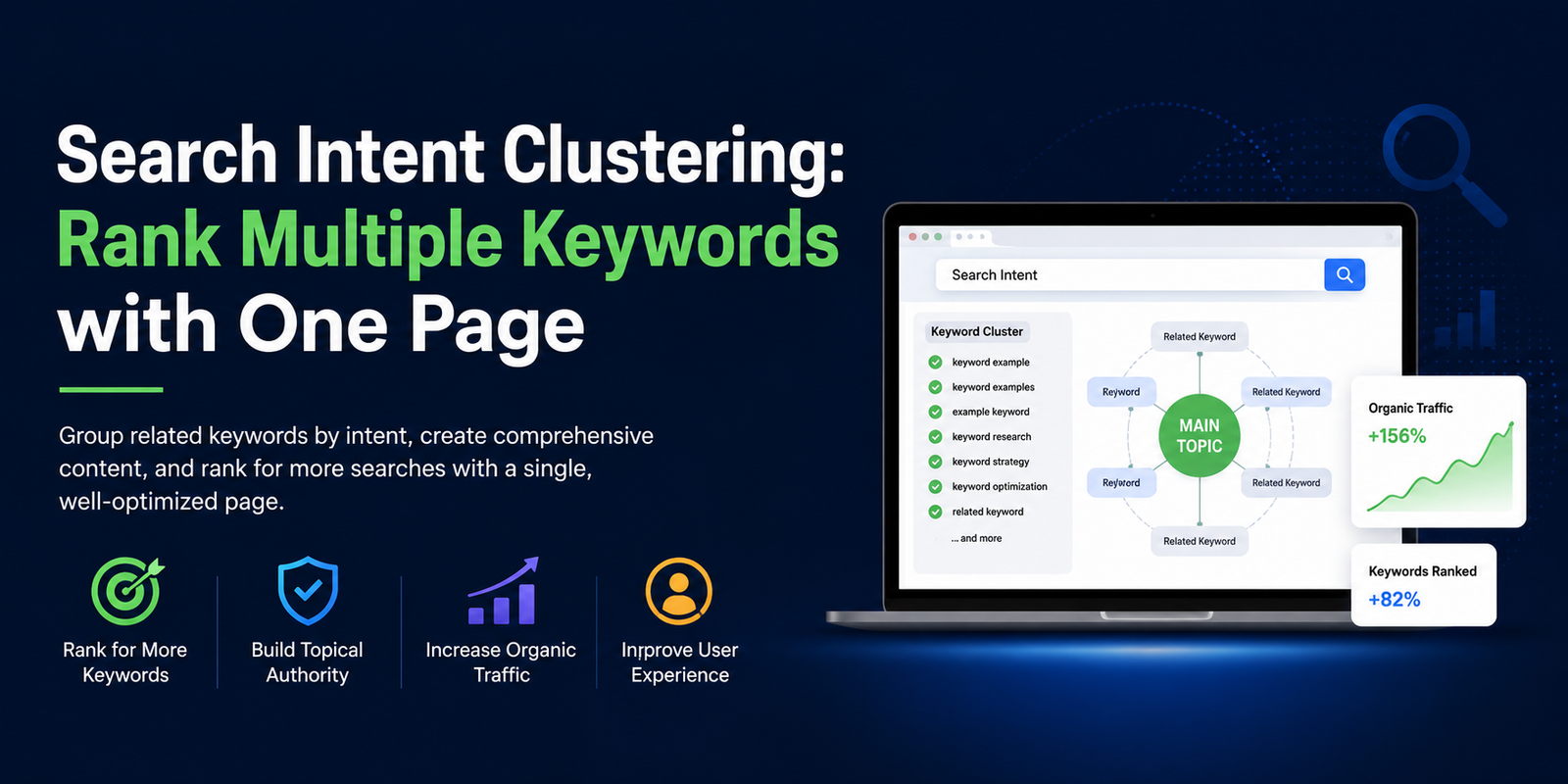
Modern SEO is no longer about ranking a page for just one keyword. Google's algorithm now understands topics, context, and user intent better than ever before. This means a single well-optimized page can rank for multiple related keywords when the content fully satisfies what users are searching for.
This strategy is called search intent clustering, and it has become one of the most effective SEO techniques in 2026. Instead of creating several pages targeting similar keywords, you group related keywords by intent and optimize one strong page around them. This helps improve rankings, avoid duplicate content, and build stronger topical authority.
In this guide, you'll learn what search intent clustering is, why it matters, and how to use it to rank multiple keywords with a single page.
What Is Search Intent Clustering?
Search intent clustering is the process of grouping keywords that share the same search intent. Even if users type different phrases into Google, they may still be looking for the same answer.
For example:
-
“How to lose weight fast.”
-
“quick weight loss tips”
-
“fastest way to lose weight”
All three keywords have the same informational intent. The user wants advice on losing weight quickly. Instead of creating three separate articles, you can create one comprehensive guide that naturally targets all three keywords.
Google now prioritizes pages that cover a topic completely rather than pages focused on exact-match keywords. That's why search intent clustering is essential for modern SEO.
Why Search Intent Clustering Matters
Avoids Keyword Cannibalization
When multiple pages target similar keywords, they compete against each other in search results. This is known as keyword cannibalization.
Clustering related keywords into one page prevents this issue and helps Google understand which page should rank.
Builds Topical Authority
A detailed page covering an entire topic signals expertise and authority to search engines.
Comprehensive content tends to:
-
Rank for more long-tail keywords
-
Earn more backlinks
-
Increase user engagement
-
Improve dwell time
One strong page usually performs better than several thin pages.
Improves User Experience
Users prefer finding complete information in one place instead of visiting multiple pages.
A well-clustered page answers related questions naturally, helping visitors stay longer and engage more with your content.
Increases Organic Traffic
A page optimized for multiple related keywords can rank for dozens of search queries at once. This allows you to drive more traffic without creating unnecessary content.
Understanding Search Intent
Before clustering keywords, you need to understand the four main types of search intent.
Informational Intent
The user wants to learn something.
Examples:
-
“What is SEO?”
-
“How does local SEO work?”
Best content types:
-
Blog posts
-
Tutorials
-
Guides
Navigational Intent
The user wants to find a specific website or brand.
Examples:
-
“Google Search Console”
-
“Ahrefs login”
Transactional Intent
The user is ready to take action or make a purchase.
Examples:
-
“Buy SEO tools.”
-
“Hire an SEO agency.”
Best content types:
-
Service pages
-
Product pages
-
Landing pages
Commercial Investigation Intent
The user is researching options before making a decision.
Examples:
-
“best SEO tools 2026”
-
“Ahrefs vs SEMrush”
Best content types:
-
Comparisons
-
Reviews
-
List articles
When clustering keywords, only group keywords that share the same intent and content format.
How to Build Keyword Clusters
Step 1: Collect Keywords
Start with a seed keyword related to your topic.
Use tools like:
-
Google Autocomplete
-
People Also Ask
Gather 50–100 related keywords around your topic.
Step 2: Analyze Search Results
Search your keywords on Google and compare the top-ranking pages.
If the same pages appear for multiple keywords, Google sees them as sharing the same intent. These keywords can be grouped into one cluster.
Step 3: Group Keywords by Intent
Organize keywords into clusters where:
-
Search intent matches
-
The topic is similar
-
The ideal content format is the same
This helps create a clean SEO structure.
Step 4: Choose a Primary Keyword
Every cluster should have one main keyword with the highest search volume or clearest intent.
The primary keyword becomes the focus of the page, while secondary keywords support it naturally throughout the content.
How to Optimize One Page for Multiple Keywords
Use a Strong Title Tag
Include the primary keyword naturally in the title.
Example:
“Search Intent Clustering: Rank Multiple Keywords with One Page”
Optimize Headings
Use secondary keywords naturally in H2 and H3 headings to improve topical relevance.
Write Comprehensive Content
Focus on fully answering the topic rather than repeating keywords unnaturally.
Modern SEO rewards content that:
-
Solves user problems
-
Covers related subtopics
-
Answers common questions
-
Provides valuable insights
Improve Internal Linking
Link related pages together to build topical authority across your website.
Internal links help search engines understand the relationship between your content.
Common Keyword Clustering Mistakes
Mixing Different Intents
Do not combine informational and transactional keywords on the same page.
For example:
-
“What is SEO?”
-
“Buy SEO services.”
These require separate pages.
Keyword Stuffing
Adding every keyword variation repeatedly makes content unreadable and harms SEO.
Use keywords naturally.
Over-Clustering
Not all keywords belong together. If the search results are very different, create separate pages.
Real-World Example
Imagine you run a fitness blog and want to target:
-
“How to build muscle at home.”
-
“home muscle workout”
-
“Build muscle without a gym.”
All these keywords share the same informational intent.
Instead of creating multiple articles, you can publish one comprehensive guide titled:
“How to Build Muscle at Home: Complete Bodyweight Workout Plan”
This single page can rank for all related keywords while building stronger authority and backlinks.
Conclusion
Search intent clustering is one of the most effective SEO strategies for 2026. By grouping related keywords based on user intent, you can create fewer but stronger pages that rank for multiple searches.
Instead of focusing on individual keywords, focus on solving the user's problem completely. When your content aligns with search intent, Google is more likely to reward it with higher rankings and broader visibility.
The future of SEO is not about keyword repetition — it's about understanding intent, building topical authority, and creating the best answer for the user's search.
Frequently Asked Questions (FAQs)
1. What is search intent clustering in SEO?
Search intent clustering is the process of grouping related keywords based on the same user intent. Instead of creating multiple pages for similar searches, SEO professionals optimize one comprehensive page to rank for several related keywords.
2. Why is keyword clustering important for SEO in 2026?
Keyword clustering helps improve topical authority, prevents keyword cannibalization, enhances user experience, and allows a single page to rank for multiple search queries, leading to higher organic traffic.
3. How do I identify keywords with the same search intent?
You can identify similar search intent by analyzing Google search results. If the same pages rank for different keywords, Google likely considers them part of the same intent cluster.
4. Can one page rank for multiple keywords?
Yes. A well-optimized page with comprehensive content can rank for dozens or even hundreds of related keywords when the content fully satisfies user intent and covers the topic in depth.
5. What tools can help with keyword clustering?
Popular tools for keyword clustering include Ahrefs, SEMrush, Ubersuggest, Google Keyword Planner, and Google Search Console. These tools help discover related keywords and search intent patterns.
6. What is the difference between keyword clustering and keyword stuffing?
Keyword clustering focuses on naturally covering related topics and intents within high-quality content, while keyword stuffing involves unnaturally repeating keywords, which can harm readability and SEO rankings.