







Introduction
Businesses today rely heavily on digital marketing to attract customers, increase brand awareness, and generate leads. However, choosing the right marketing strategy can be challenging, especially when deciding between Search Engine Optimization (SEO) and Pay-Per-Click (PPC) advertising. Both strategies aim to increase visibility in search results, but they work in different ways and deliver results over different timelines.
Understanding how SEO and PPC marketing strategies work can help businesses make informed decisions about where to invest their marketing budget. While some companies prioritize long-term organic growth through SEO, others focus on quick results using paid advertising campaigns.
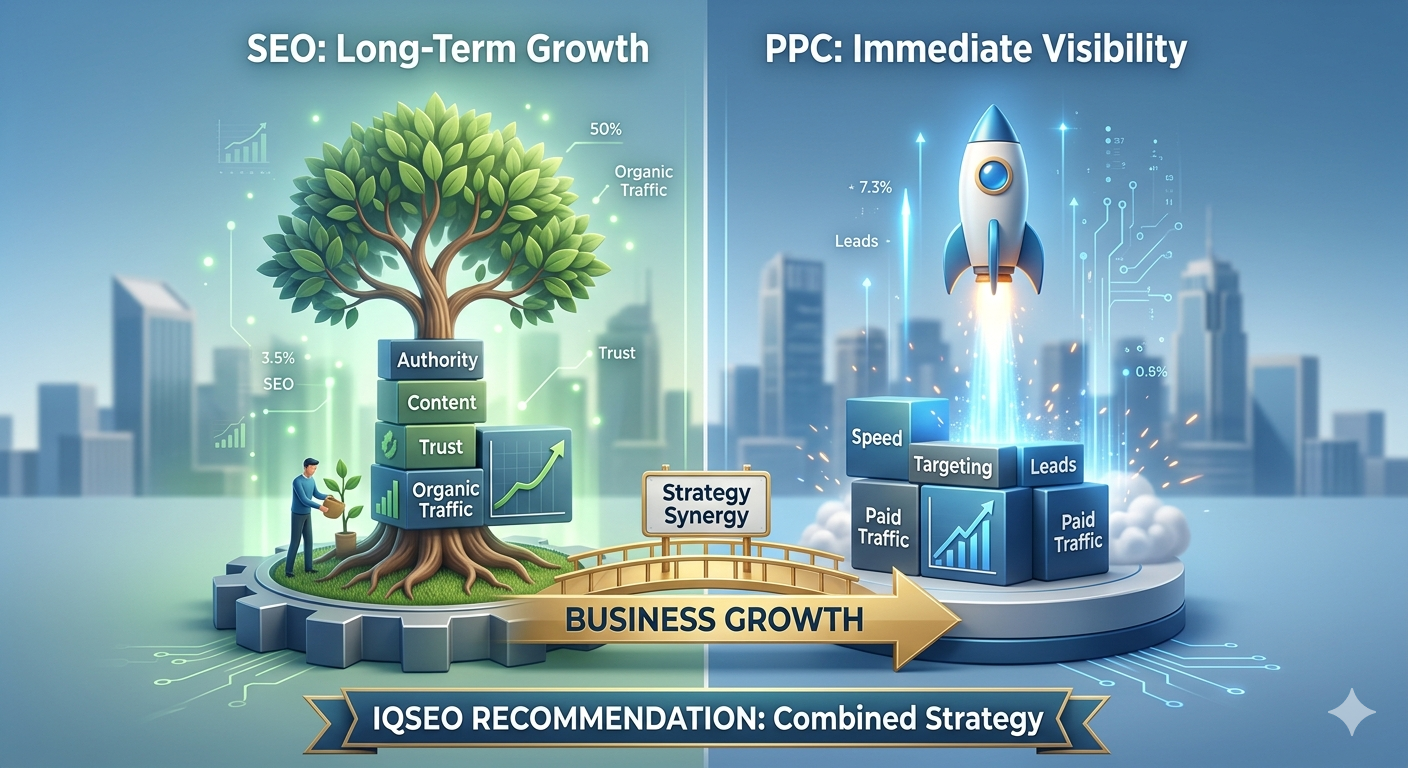
At IQSEO, we help businesses evaluate their marketing goals, competition, and growth opportunities before recommending the right strategy. In many cases, a balanced approach that combines both organic search optimization and paid advertising delivers the most effective results.
Understanding SEO (Search Engine Optimization)
What Is SEO?
Search Engine Optimization (SEO) refers to the practice of enhancing a website so it ranks higher in unpaid search results on search engines. The goal of SEO is to help search engines understand website content so it can appear in relevant search queries.
When implemented correctly, SEO strategies help businesses attract visitors who are actively searching for related products, services, or information.
SEO typically involves multiple optimization techniques, including:
-
Keyword research and search intent analysis
-
On-page optimization for webpages
-
Technical improvements that enhance website performance
-
Building authority through high-quality backlinks
-
Creating valuable and informative content
By focusing on these elements, businesses can improve their organic search rankings and attract consistent traffic without paying for each visitor.
Benefits of SEO for Businesses
SEO is widely considered one of the most effective long-term digital marketing strategies. Unlike paid campaigns, organic rankings continue generating traffic even after the initial optimization work is completed.
Key advantages of SEO include:
-
Sustainable organic website traffic
-
Increased credibility and brand authority
-
Higher visibility in search engine results
-
Better user experience and website performance
-
Long-term marketing value and return on investment
Because SEO focuses on delivering valuable information and optimized website experiences, it aligns well with modern search algorithms that prioritize helpful and authoritative content.
Understanding PPC (Pay-Per-Click Advertising)
What Is PPC Advertising?
Pay-Per-Click (PPC) advertising is a digital marketing model where businesses pay for each click on their advertisements. These ads typically appear at the top of search engine results or across advertising networks.
Unlike SEO, which builds organic visibility over time, PPC campaigns provide immediate exposure. Once an ad campaign is launched, businesses can start receiving traffic almost instantly.
PPC advertising involves several important components:
-
Selecting target keywords for advertising
-
Creating compelling ad copy
-
Setting campaign budgets and bidding strategies
-
Designing optimized landing pages for conversions
-
Monitoring and improving campaign performance
Benefits of PPC for Businesses
Many businesses choose PPC when they need quick visibility or want to promote specific products and services.
Some key benefits of PPC include:
-
Immediate traffic to websites and landing pages
-
Precise targeting based on keywords and audience behavior
-
Flexible budget control
-
Measurable results and performance tracking
-
Faster lead generation for marketing campaigns
Because PPC campaigns can be adjusted in real time, businesses can quickly optimize ads to improve results and reduce advertising costs.
Key Differences Between SEO and PPC
Although SEO and PPC both aim to increase visibility in search engines, they differ in how traffic is generated and how results are achieved.
SEO focuses on building organic rankings through content optimization, technical improvements, and authority building. Results usually take time to develop, but once rankings are established, websites can receive ongoing traffic without paying for every visitor.
PPC, on the other hand, generates paid traffic through advertising campaigns. Paid search advertising works by allowing businesses to place bids on specific keywords so their ads can appear in search engine results. As long as the campaign budget remains active, ads continue to appear and generate traffic.
Another major difference lies in sustainability. SEO delivers long-term growth because optimized content continues attracting visitors over time. PPC campaigns, however, stop generating traffic once advertising spending ends.
Understanding these differences helps businesses determine which strategy aligns better with their marketing goals and timelines.
SEO vs PPC Cost Considerations
One of the most common questions businesses ask is which strategy is more cost-effective.
SEO typically requires an investment in content creation, website optimization, and technical improvements. Although results take time to appear, the long-term value of organic rankings can significantly reduce marketing costs over time.
PPC campaigns operate differently because businesses pay for each click generated by their advertisements. While this approach can quickly generate leads and sales, the cost can increase depending on keyword competition and campaign performance.
For many businesses, the decision between SEO and PPC depends on factors such as:
-
Marketing budget
-
Competition within the industry
-
The speed at which results are needed
-
Long-term growth objectives
By carefully evaluating these factors, businesses can determine which strategy delivers the best return on investment.
When Businesses Should Choose SEO
SEO is often the best option for companies that want to build a strong and sustainable online presence.
Businesses may benefit from focusing on SEO when they want to:
-
Increase long-term organic search traffic
-
Improve website credibility and authority
-
Generate consistent leads without ongoing advertising costs
-
Strengthen brand visibility in search engines
-
Create valuable content that attracts targeted audiences
Because SEO builds momentum over time, it works especially well for businesses that are committed to long-term digital growth.
When Businesses Should Choose PPC
PPC advertising can be highly effective for businesses that require faster results or want to promote specific offers.
Businesses often rely on PPC when they need to:
-
Launch new products or services quickly
-
Drive immediate website traffic
-
Generate leads for short-term campaigns
-
Test keyword performance before investing in SEO
-
Promote limited-time offers or seasonal campaigns
Because PPC provides instant visibility, it is commonly used for campaigns that require quick customer acquisition.
Why Combining SEO and PPC Can Deliver Stronger Results
In many cases, the most effective digital marketing strategy involves combining both SEO and PPC marketing efforts. When used together, these strategies can complement each other and maximize search visibility.
Combining SEO and PPC can help businesses:
-
Show up in both paid advertisements and organic search listings.
-
Increase overall website traffic
-
Gain valuable keyword insights from advertising data
-
Improve brand visibility across search platforms
-
Generate both short-term and long-term marketing results
This integrated approach allows businesses to achieve faster results while also building sustainable online growth.
SEO and PPC Performance Metrics
Measuring the effectiveness of digital marketing campaigns is essential for improving performance and maximizing return on investment.
For SEO strategies, businesses often track metrics such as:
-
Organic traffic growth
-
Keyword ranking improvements
-
Click-through rates from search results
-
Engagement metrics such as time on page
For PPC campaigns, common performance indicators include:
-
Cost per click
-
Conversion rates
-
Advertising return on investment
-
Campaign engagement metrics
By analyzing these data points, businesses can continuously optimize their marketing strategies for better results.
Common SEO and PPC Mistakes to Avoid
Many businesses struggle to achieve desired results because of avoidable marketing mistakes.
Some common issues include:
-
Ignoring keyword research and search intent
-
Creating poorly optimized landing pages
-
Focusing only on short-term marketing results
-
Not tracking campaign performance effectively
-
Neglecting content quality and user experience
Avoiding these mistakes helps businesses improve both organic search performance and advertising effectiveness.
How IQSEO Supports Strategic Digital Growth
Developing a successful digital marketing strategy requires careful planning, research, and continuous optimization. At IQSEO, we help businesses create customized strategies that align with their marketing goals and audience behavior.
Our approach focuses on:
-
Comprehensive keyword research and competitor analysis
-
Data-driven SEO and PPC campaign planning
-
High-quality content creation that supports organic rankings
-
Continuous performance monitoring and optimization
By focusing on search visibility, user experience, and data-driven insights, we help businesses build stronger digital marketing foundations that support long-term growth.
Frequently Asked Questions
What is the key distinction between SEO and PPC marketing?
SEO focuses on improving organic search rankings through optimization and content strategies, while PPC generates traffic through paid advertising campaigns.
Which strategy delivers faster results?
PPC campaigns typically generate traffic quickly because ads appear immediately after campaigns are launched. SEO strategies take more time but provide long-term organic traffic.
Can businesses use SEO and PPC together?
Yes, combining SEO and PPC strategies can improve overall visibility and provide both short-term and long-term marketing benefits.
How much time does SEO typically require to deliver noticeable results?
The time it takes to see SEO improvements depends on factors such as market competition, the credibility of the website, and the overall quality of the content. In most cases, noticeable improvements appear over several months.
Conclusion
Choosing between SEO and PPC depends largely on business goals, marketing budgets, and growth timelines. SEO offers sustainable organic visibility that continues delivering results over time, while PPC provides immediate exposure and fast lead generation.
Rather than viewing these strategies as competing options, many businesses benefit from using both approaches strategically. By combining organic search optimization and targeted advertising, companies can strengthen their online presence and reach a wider audience.
At IQSEO, we focus on developing marketing strategies that align with long-term growth objectives while also delivering measurable results. Through strategic planning, optimized content, and performance-driven campaigns, businesses can build stronger visibility in modern search environments and achieve sustainable digital success.